WOUND CARE CENTRAL

Supporting patients and their caregivers in their wound healing journey.

The mission of Wound Care Central is to provide excellent in home wound care, education and the tools necessary to help patients with chronic wounds gain independence, improvement of wound status and wound resolution.

Now accepting straight Medicare and Medicaid (no PPO or HMO) patients in the Central Florida area including Lakeland, Winter Haven and Polk City. Call 863-486-6969 for more information.

Our products are guaranteed for having excellent quality.
Enjoy free shipping with purchases over $50.00 within the USA. Use code SHIP50. Shipping available worldwide. Shipping rates vary by location.

INGREDIENTS for WOUND HEALING

Correct diagnosis of wound, proper advanced wound care, TEAM WORK between the provider and the patient/caregivers, compliance in wound care treatment, diagnostic tests when needed, management of infection if applicable, time, dedication, and patience. Prayers are also helpful!

  • Hemostasis

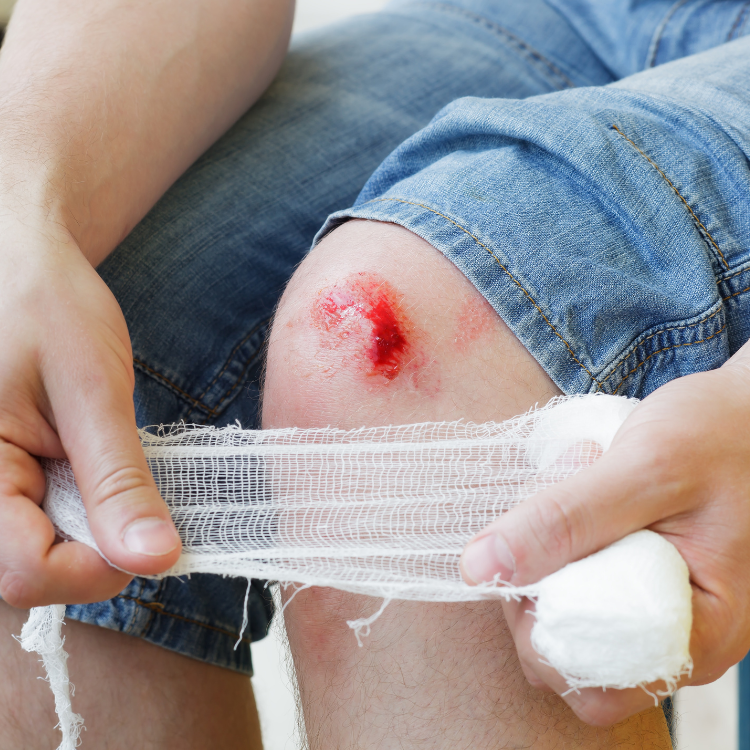
    When the initial wound occurs, the platelets stick together to form a clot. Blood vessels constrict to slow down blood flow. Coagulation occurs and reinforces platelet plug.

  • Inflammatory

    This stage causes localized swelling. Inflammation helps to control bleeding and prevents infection. During this stage, bacteria are removed from the wound area. It is expected to experience heat, pain and redness during this phase. This is a natural response.

  • Proliferative

    During this phase, self repair continues. New tissue made up of collagen and other substances rebuilds the wound. The wound begins to 'contract' or come together. A new network of blood vessels are formed so the area can receive oxygen and nutrients.

  • Maturation

    This is the final stage of wound healing. Collagen fibers cross link to make the skin stronger. This phase usually begins at 21 days but can take up to one year. The area will only be 80% as strong as it was previously at best.

1 of 4
  • WOUND CARE EDUCATIONAL RESOURCES

    A collection of wound care books on a variety of topics such as how to care for wounds, how to select the appropriate dressing, how to care for wounds according to the type of wound.

  • MEDICAL EQUIPMENT

    Using the correct medical equipment and wound care supplies is an important aspect of wound care therapy.

  • RENEW YOUR SPIRIT & SOUL

    Chronic wounds can become emotionally draining and a source of stress and anxiety for patients as well as caregivers. Daily affirmations and staying positive can be beneficial during this time.

About the Wound Gallery

The wound gallery is composed of actual patients that have received wound care from a Certified Wound Care Provider from Wound Care Central. All patients have given permission for the wounds to be used for educational and illustration purposes.

  • RIGHT MEDIAL ANKLE ARTERIAL WOUND

    This is a chronic ankle arterial wound that has been present for one year.

  • RIGHT ANKLE ARTERIAL WOUND HEALED

    Wound has healed after weekly wound care for 8 weeks. Hyperpigmentation of the skin is common in these types of wounds.

  • ARTERIAL WOUNDS

    An arterial wound is a type of chronic wound caused by poor blood flow through the arteries, usually due to peripheral artery disease (PAD). These wounds develop when arteries become narrowed or blocked, restricting oxygen-rich blood from reaching the skin and tissues in the legs and feet. Without adequate blood supply, the affected tissue cannot heal properly, leading to slow-healing or non-healing wounds.

    Arterial wounds are typically painful, especially when the leg is elevated, and may appear pale, shiny, or have a punched-out appearance with well-defined borders. They require prompt medical evaluation and specialized treatment to improve circulation and prevent serious complications like infection or tissue loss.

1 of 3
  • RIGHT FOOT SKIN TEAR

    Right foot skin tear caused by trauma.

  • RIGHT FOOT SKIN TEAR HEALED

    The wound has healed after 6 weeks of wound care.

  • SKIN TEARS

    Skin tears require prompt assessment and appropriate wound care to prevent infection and promote healing. Monitor for signs of infection such as increased redness, warmth, or drainage. Depending on the severity and location, professional medical evaluation may be necessary to ensure proper treatment and prevent complications.

1 of 3
  • PRESSURE INJURY LEFT HEEL UNSTAGEABLE

    Pressure injury of heel caused by sustained pressure

  • PRESSURE INJURY LEFT HEEL UNSTAGEABLE RESOLVED

    Resolution of pressure ulcer after 3 months of appropriate treatment and offloading heels.

  • PRESSURE INJURIES

    Prevention is key to managing pressure ulcer risk. Regular repositioning every two hours, maintaining proper nutrition and hydration, and using pressure-relieving devices such as specialized mattresses and cushions can significantly reduce the likelihood of ulcer formation.

    Skin inspections should be performed daily, paying close attention to areas over bony prominences like heels, hips, and tailbones. Early intervention with appropriate wound care products and professional assessment can prevent minor skin changes from progressing into serious wounds.

1 of 3
  • RIGHT DORSAL FOOT ISCHEMIC ARTERIAL ULCER

    Arterial ulcer of right foot caused by peripheral vascular disease.

  • RIGHT FOOT DORSAL ISCHEMIC ULCER RESOLVED

    Resolution of right foot ischemic ulcer after aggressive wound treatment.

  • ARTERIAL ISCHEMIC ULCERS

    Understanding the underlying vascular insufficiency is critical for effective treatment planning. Many patients benefit from vascular intervention or medical management to improve blood flow before wound healing can progress. Regular monitoring of ulcer characteristics, including size, depth, and signs of infection, helps guide therapy adjustments and prevents complications that could delay recovery or necessitate more invasive procedures.

1 of 3
  • LEFT LOWER LEG HEMATOMA

    This patient suffered a hematoma after bumping her leg.

  • LEFT LOWER LEG HEMATOMA RESOLVED

    The hematoma has now resolved after weekly wound care treatment.

  • HEMATOMAS

    Hematomas vary in severity depending on their size, location, and the underlying cause. Small superficial hematomas, such as bruises, typically heal within weeks with minimal intervention. However, larger or deeper hematomas may cause pain, swelling, and limited mobility in the affected area. In some cases, medical evaluation is necessary to rule out complications or to determine if drainage or other treatment is needed. Proper wound care, elevation, and compression can help manage symptoms during the healing process.

1 of 3
  • RIGHT TOE ARTERIAL ULCER

    This patient developed a spontaneous toe ulcer.

  • RIGHT TOE ARTERIAL ULCER RESOLVED

    This toe ulcer has resolved after weekly wound care treatment.

  • ARTERIAL TOE ULCERS

    Arterial toe ulcers develop when blood flow to the foot is severely restricted, preventing adequate oxygen and nutrients from reaching the skin and tissues. These ulcers typically appear on the toes, heels, or areas under pressure and have distinct characteristics that set them apart from other wound types.

    Common features include a painful, well-defined border with a pale or necrotic base. The surrounding skin often appears shiny, hairless, and may be cool to the touch. Patients frequently report severe pain, especially at night or when the leg is elevated. The ulcer may have a punched-out appearance and tends to progress slowly without proper intervention.

    Risk factors include diabetes, smoking, high cholesterol, hypertension, and a history of heart disease or stroke. Diagnosis typically involves assessing pulses, skin color, temperature, and using tests like ankle-brachial index or imaging studies to confirm reduced arterial blood flow.

    Treatment focuses on improving circulation through medication, lifestyle changes, or surgical intervention. Early detection and management are critical to prevent infection, tissue loss, and amputation. Proper wound care, infection prevention, and addressing underlying vascular disease are essential components of healing.

1 of 3

Contact form

Maria Painter, BSND, DNP, AGNP-BC, WSOC, DAPWHC

Dr. Painter is highly specialized in wound care and has over 25 years of experience in working with complex and geriatric patients. She holds multiple degrees including a Doctoral of Nursing Practice, Bachelor’s of Science in Nursing and a Bachelor’s of Science in Food and Nutrition/Dietetics. Her kindness and compassion make her particularly valuable in this role.